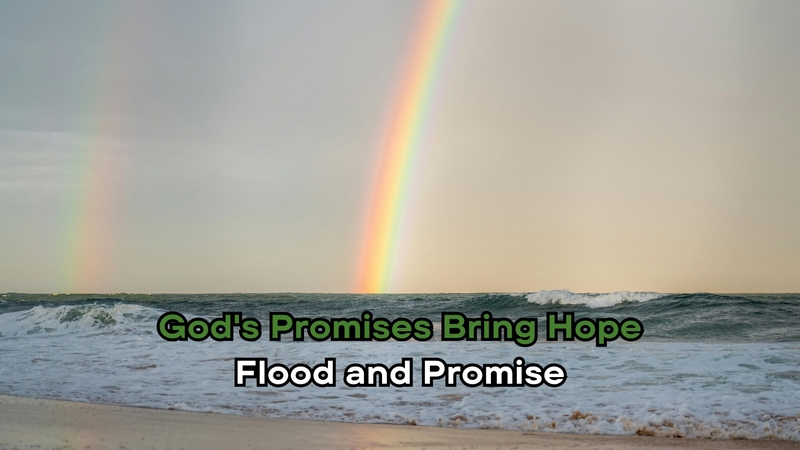
This week’s service explored the flood narrative as a profound story of rupture and repair, revealing how God’s covenant with creation—symbolized by the bow in the clouds—offers hope amid humanity’s recurring cycles of violence and idolatry. By examining competing traditions, we saw that the Bible’s editors crafted this account not to justify destruction but to invite us into a radical vision: one where God chooses renewal over retribution, calling us to follow suit by cultivating justice, respect for life, and mutual care across differences. The service challenged listeners to reflect on how our own world—like Noah’s—needs both reckoning with harm and bold commitment to rebuilding in the image of God’s love.
Three Reflection Questions for the Week:
- Repentance vs. Reset: The sermon highlighted that God’s change of mind after the flood wasn’t just about "not doing it again"—it was a commitment to new ways of being (e.g., bow in clouds, no more slaughter). How might you personally or communally practice this kind of transformed repentance this week? What small step could you take toward repairing harm or fostering connection?
- Whose Story Matters? The sermon noted that flood narratives vary widely across cultures, often reflecting different fears (e.g., overpopulation, divine wrath). Which tradition’s perspective resonates with you most—and why? How might this awareness shape how you engage with stories of suffering or resilience in your own community?
- Bow vs. Rainbow: The sermon clarified that the Hebrew word for "bow" isn’t a rainbow but a weapon—God’s gesture was to put away violence by placing it in the clouds. What does this mean for us today? How can we, like God, use our own "weapons" (e.g., words, resources, power) not to control or dominate, but to symbolize peace and repair—even when it feels risky or uncomfortable?